“It doesn’t mean that everything is the same. It means that anything has the potential to become important.”
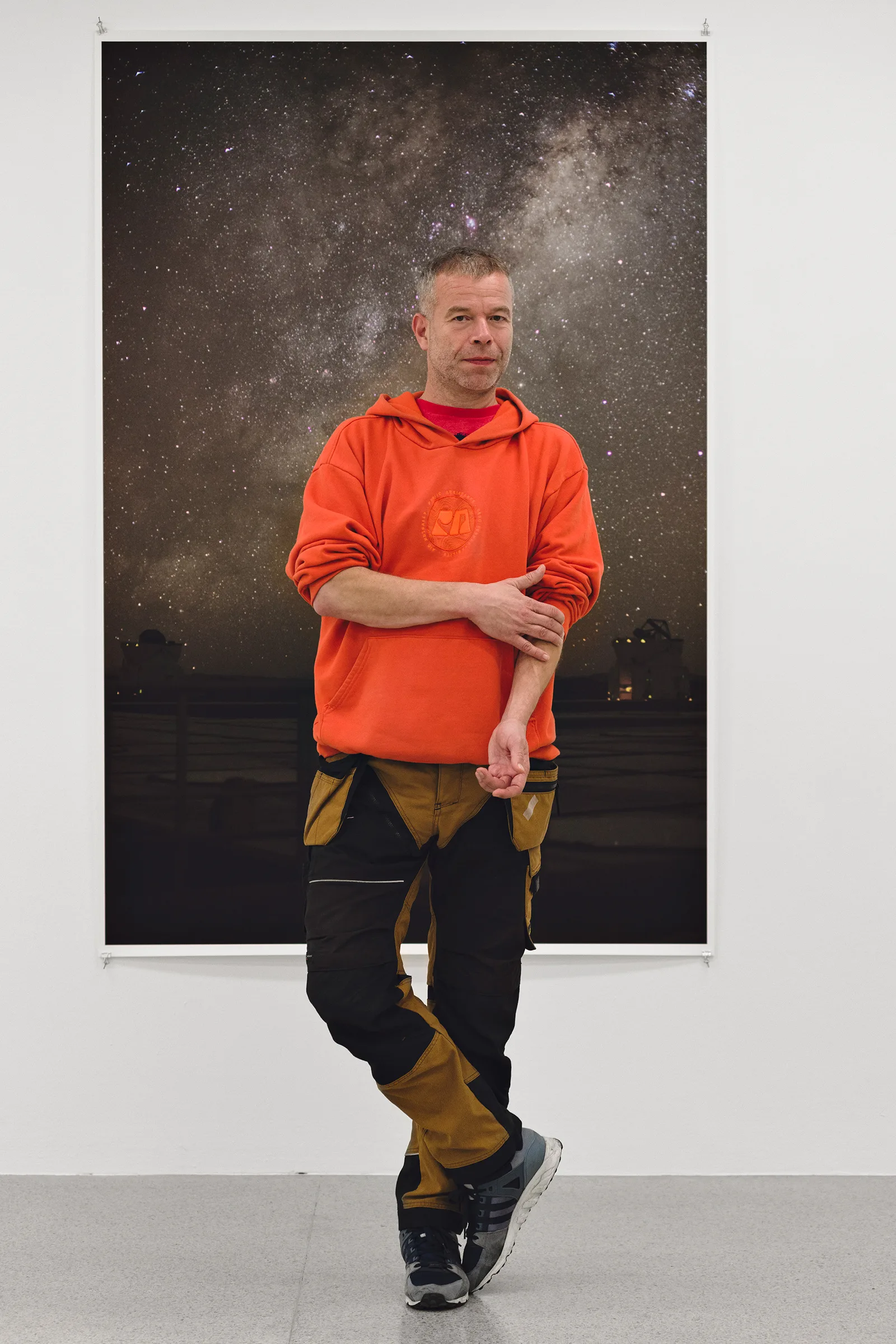
In 2000, Wolfgang Tillmans (b. 1968) became the first photographer, and the first artist from outside Britain, to win the Turner Prize. His pictures bring together subjects that resist any single description: portraits of friends and lovers, fruit on a windowsill, discarded clothes, a solar eclipse, the Concorde, abstract images.
Neither his private life nor the society around him has stayed outside his work. Living with H.I.V. himself, he has drawn on the experience of the AIDS crisis, and before Britain’s 2016 referendum on leaving the European Union, he designed posters urging people to vote to remain.
For Mr. Tillmans, photography is not about making only special things look special. It is closer to taking a second look, both at what is already considered important and at what no one has yet called important.
Jeans hung over a banister, people kissing in a club, cynicism and hope, and the pill bottles from 17 years of H.I.V. treatment. Follow his pictures and his life far enough, and you arrive at a single question:
What do we live our lives believing is important?
The Right to Be Moved by a Pair of Jeans
Your work includes solar eclipses and gold bars, but also an old pair of jeans hanging over a railing. There is a sense that you refuse to decide in advance what matters more and what matters less. Where does that way of seeing come from?
Making something ordinary special is not the only aim of my work. Looking afresh at things already considered important, like the wonder of an eclipse or the value of a gold bar, is part of it, and so is looking at a pair of jeans dropped on the floor. In the end, it’s about being free to reconsider value.
I encourage people to look at things without deciding beforehand what is more or less important. Whether an old pair of jeans can move you is for each person to judge. If you keep that possibility open, your gaze becomes freer, and everyone can take in what’s in front of them in their own way.
Your 2003 exhibition at Tate Britain in London was titled “if one thing matters, everything matters.” The title seems close to the attitude you just described. But the phrase was sometimes taken to mean that everything is equally important.
Yes. What I was talking about was potential.
It doesn’t mean everything is equally important. It means anything has the potential to become important. There’s no reason for one thing to be fixed from the outset as less important than another.
But some people took it to mean “everything is the same.” That wasn’t what I wanted to say.
Gray Jeans on a Banister
In 1991, you were studying art in Bournemouth, a coastal town in southern England. A pair of gray jeans was hanging over the railing in your student apartment. Most people would have walked past, but to you it looked like a sculpture. What caught your eye?
For me, photography is connected to sculpture. It’s a matter of transferring the three-dimensional world in front of you onto a single flat plane.
When I saw those gray jeans hanging over the railing in the student apartment in Bournemouth, they looked like a sculpture. But I couldn’t exactly take the whole railing off and carry it into a gallery. A photograph can hold that scene in a single image. That’s when I started thinking about the economy of photography as a medium.
I was also drawn to the surface of the jeans. There was something sensual about it.
I’ve always been very interested in clothes. A garment is flat to begin with, but it takes on form when it wraps around a body, and the body in turn leaves its traces on the fabric. We put clothes on every day. They are objects that stay very close to the body.
Why He Fires the Flash in a Club
You’ve said you rarely take pictures in clubs. Yet when you came across people kissing, you picked up the camera. Why did you feel that this scene, at least, had to be recorded?
Sometimes I feel that what happens inside a club touches my own life very closely. There are moments when you look at people and think, “Wow, this is really special.”
If you think about 10,000 years of human civilization, the time in which a scene like this could happen freely is extremely short. People fought for exactly these moments 150 years ago, and 40 years ago, too.
When I think that, I want to step into the scene myself, witness it firsthand and keep it in a photograph.
Of course, that means firing a flash in the faces of two gay men who are kissing. In the moment of taking the picture, you have to accept a certain amount of discomfort and awkwardness.
Still, I think they know I’m not someone just watching from the outside, but someone who shares the same space and the same culture.
People Are Terrible. He Hopes Anyway.
You describe yourself as a hopeful person. What do you mean by hope?
I’m a hopeful person, but I don’t expect everything to turn out perfectly. Neither perfection nor success is an absolute standard. If you set your expectations too high, you’re bound to be disappointed.
I just try to see things as fairly as I can. That’s enough. I don’t want to exaggerate, either.
But I don’t want to spend my time on cynicism. My time is precious.
I once saw a man wearing a T-shirt that said:
“Don’t look down on anybody… unless you are helping them up.”
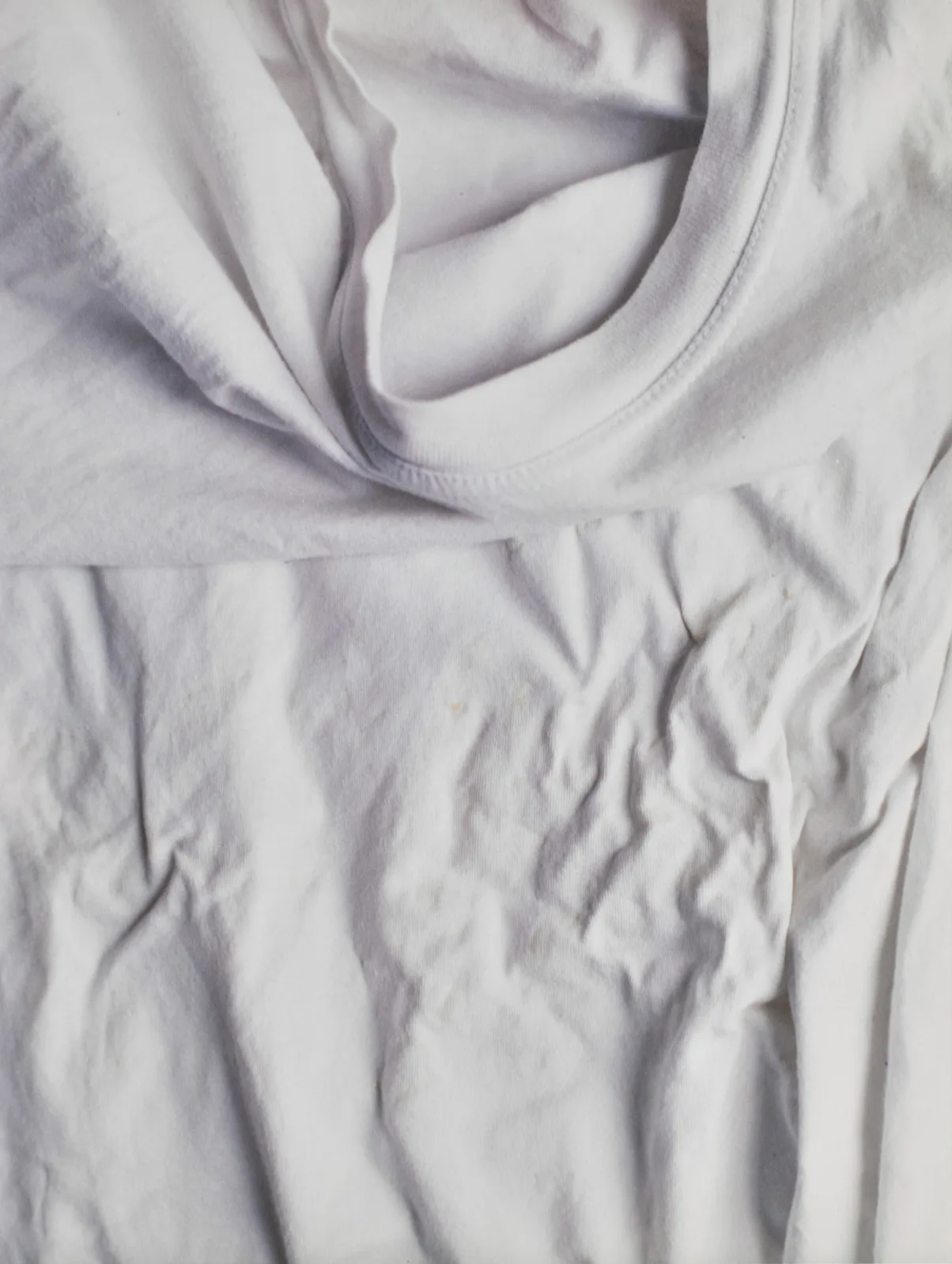
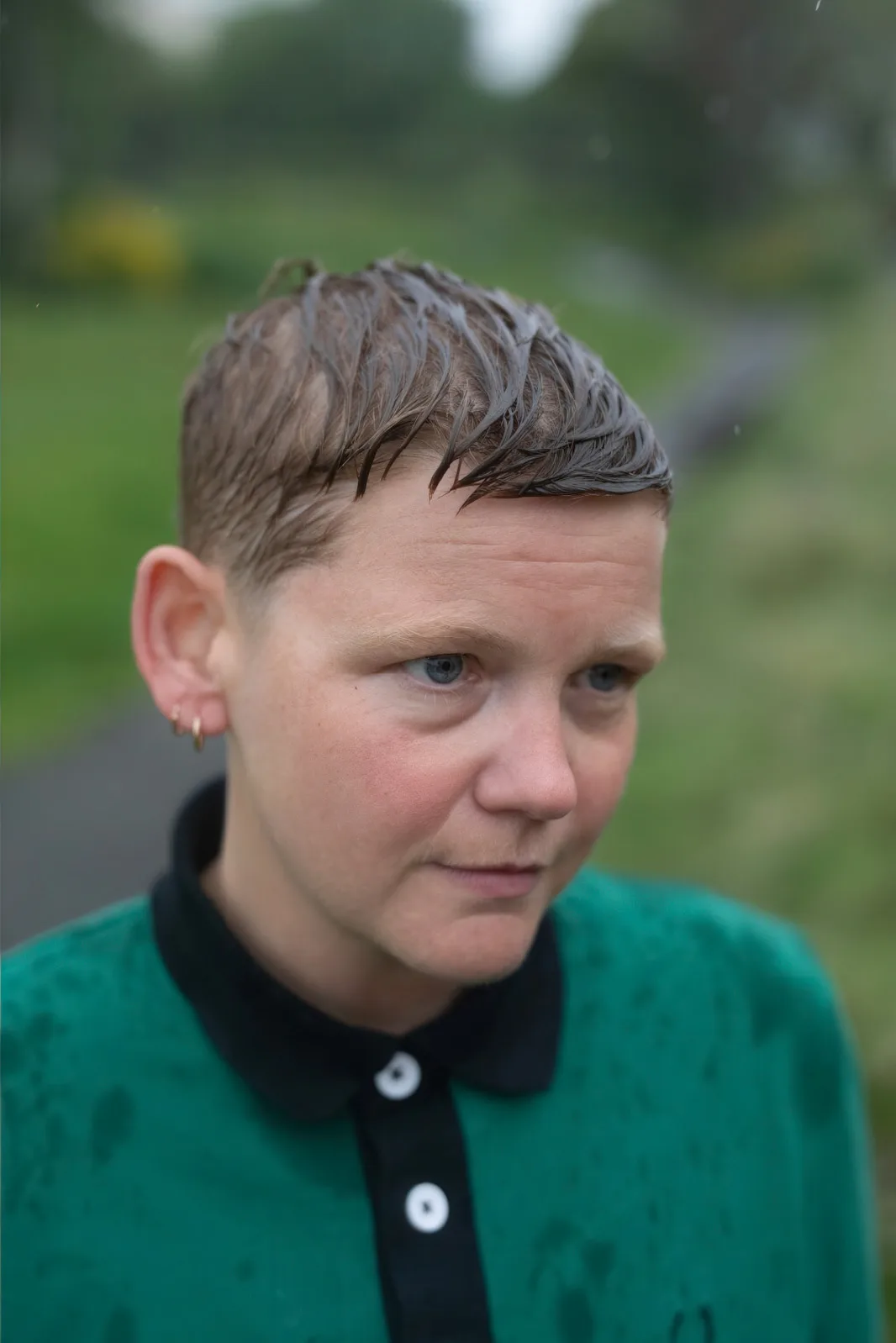
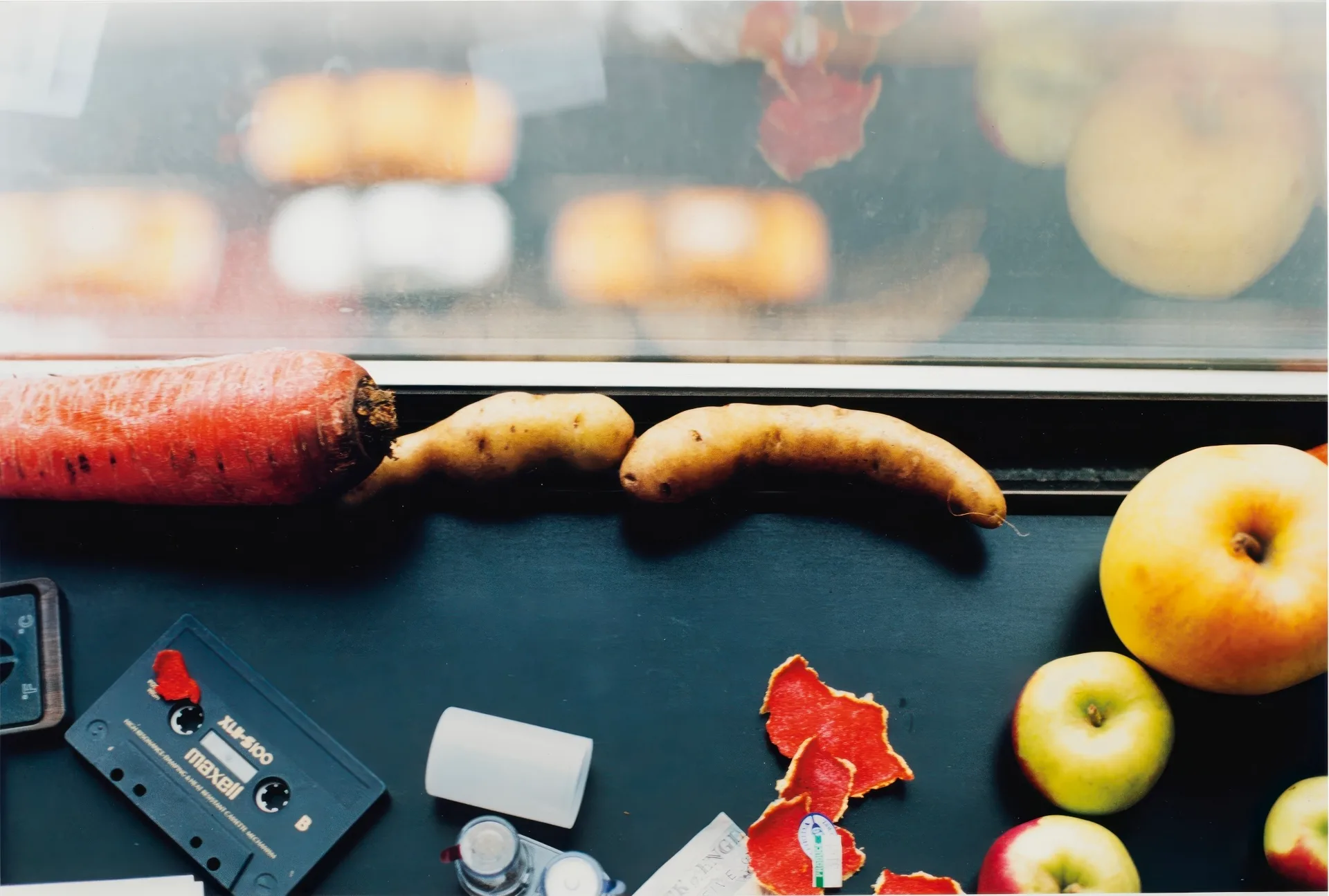
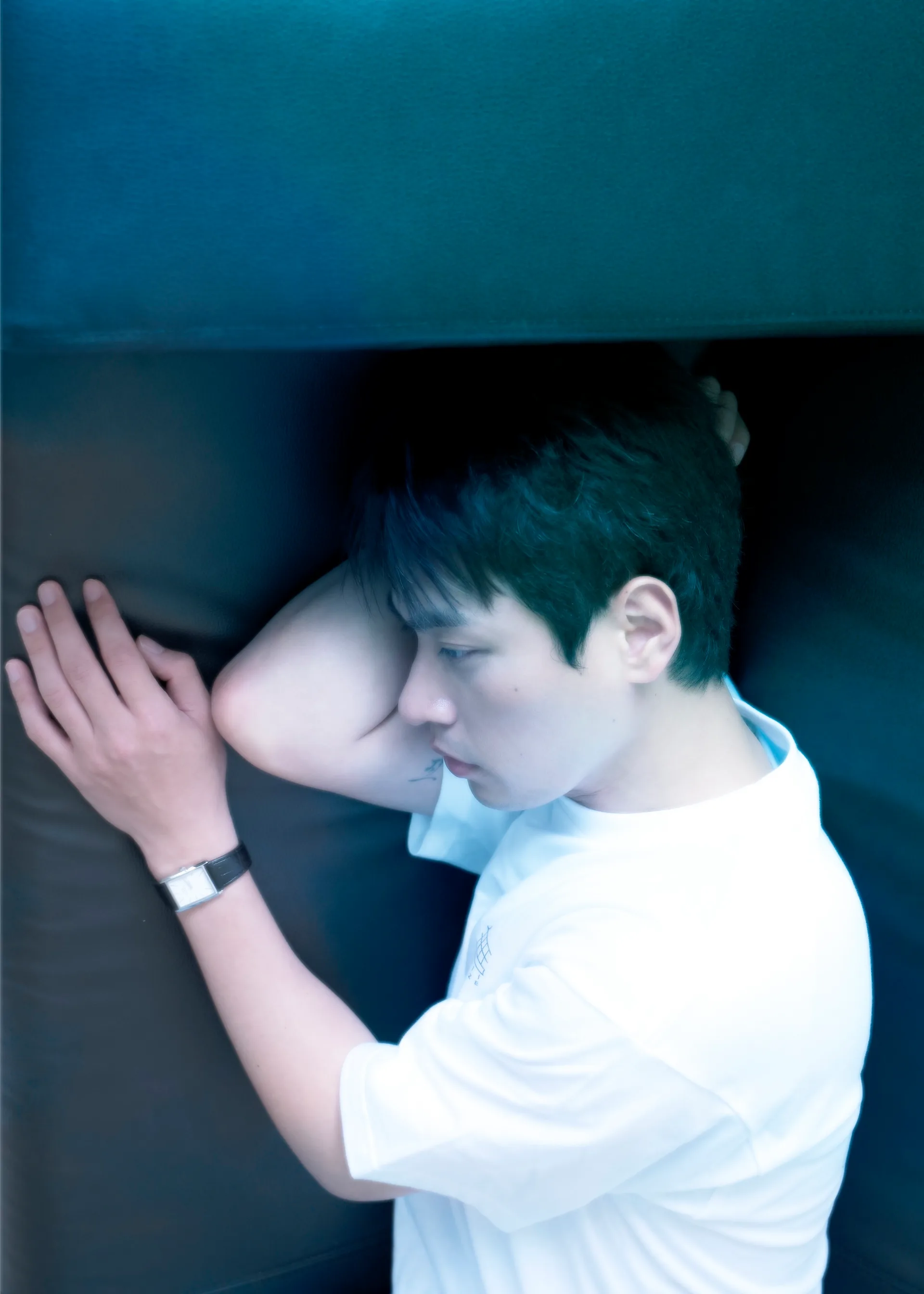
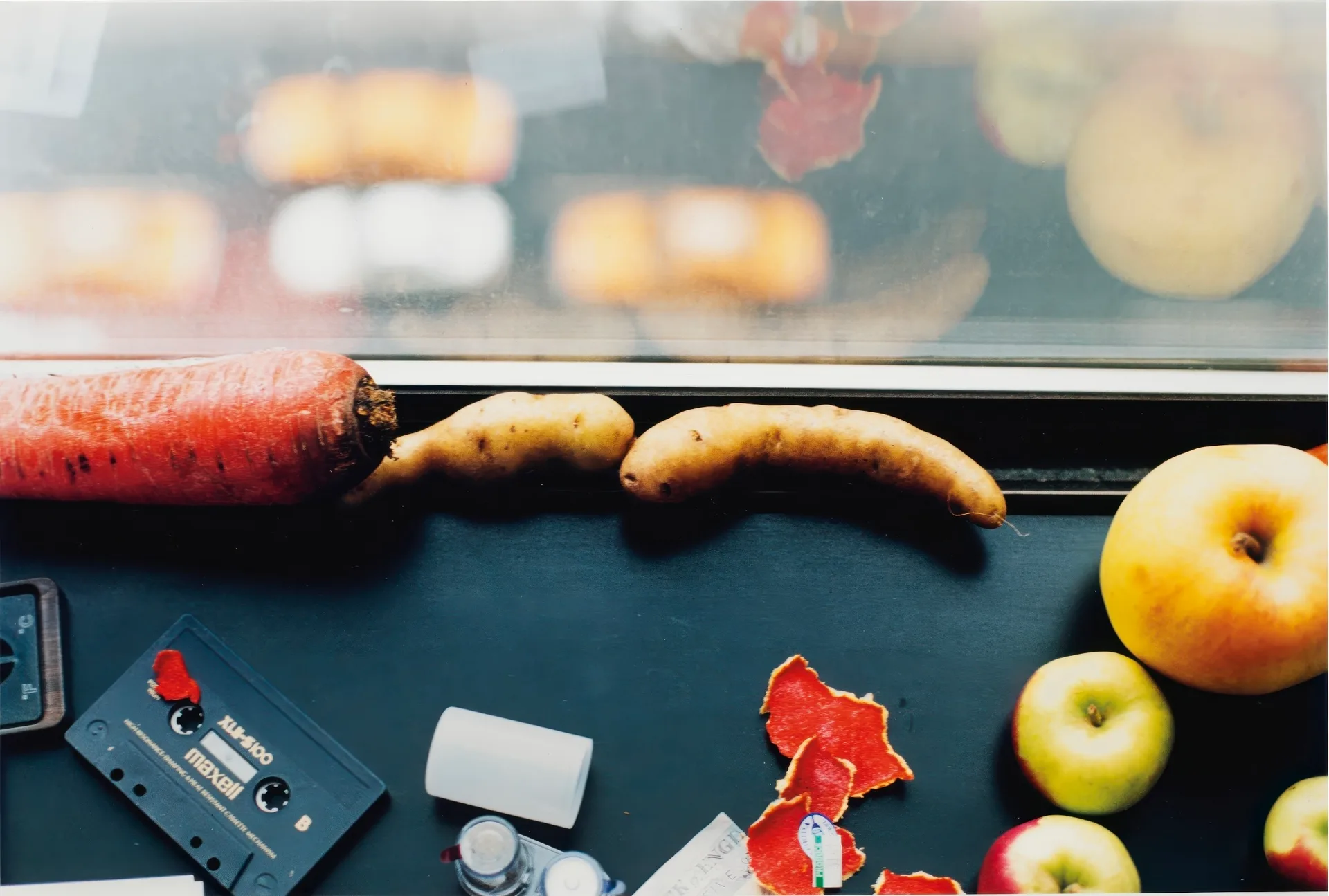
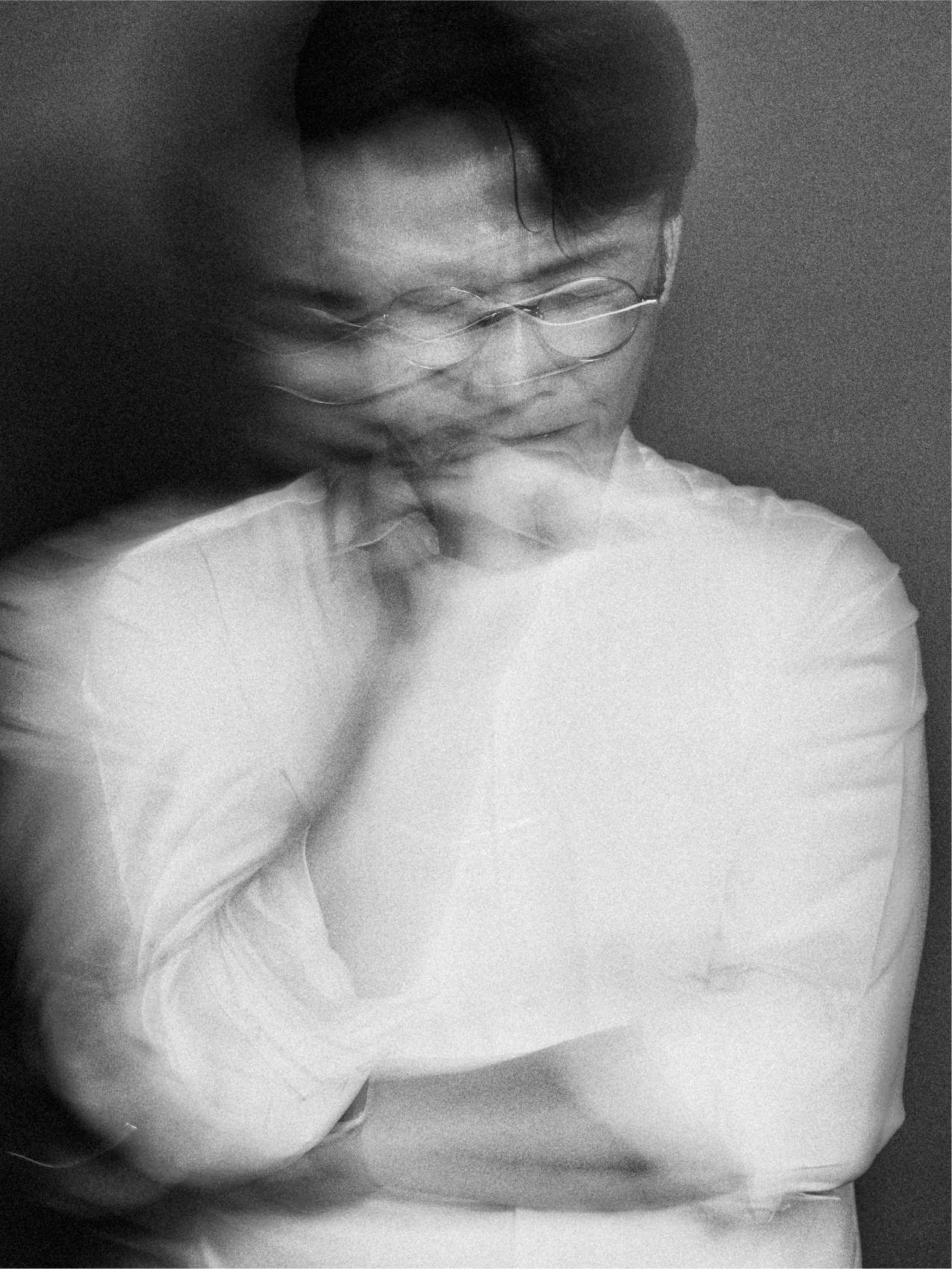
Images, from top: “sportflecken,” 1996; “Kae Tempest,” 2021; “still life, New York,” 2001. All by Wolfgang Tillmans.
Given that you came of age during the AIDS crisis, the hope you describe sounds different from simple optimism.
People are terrible. New ways of ruining other people’s lives keep appearing. It makes you ask whether we have any reason to hope at all.
Still, I choose hope. Not hoping is what creates hopelessness. It’s a kind of self-fulfilling prophecy.
I grew up during the AIDS crisis. It was a time when discovering that you were gay was bound up with a threat to your life. Romance could kill you.
And yet people danced. They kept on living.
There was joy and happiness even amid tragedy. I find it hard to imagine happiness without any tragedy at all.
Life holds tragedy, and at the same time joy and elation. If that contentment is honest, I think there can be humility in it, too.
Seventeen Years of Pill Bottles
“17 Years’ Supply” (2014) is a photograph of the empty bottles from the H.I.V. medication you have taken for many years. You say you didn’t collect them with the intention of making a work.
In 1984, when I was 16, I had sex with a man for the first time, away from school. That same month, AIDS appeared on the cover of the German newsweekly Der Spiegel for the first time. From my teens until I had just become an adult, I was always afraid, and I lived carefully.
Back then, deciding whether to get tested for H.I.V. was itself a terrible dilemma. If you found out you were positive, there was almost nothing you could do. If you didn’t get tested, you had to live with the fear of not knowing. Neither was an easy choice.
Combination therapy arrived in 1996. About a year later, a month after my partner, the painter Jochen Klein, died, I learned that I was H.I.V.-positive, too.
While Jochen was alive, I told him that now that there were treatments, he should get tested. But he didn’t have enough time to benefit from them.
Why I’m Alive
I started taking the pills.
Every time I looked at those small blue, purple and white pills, I felt awe.
What on earth is this? What is inside these tiny pills?
I imagined them moving through my body like laser-guided weapons, stopping the virus from doing its work.
I was grateful for the medication, and I have a slightly obsessive streak, so from 1997 on I kept every single empty bottle. Then, in 2014, I gathered the bottles that had been scattered here and there into one big box.
That was when it finally hit me.
These were the pills I had taken over the past 17 years, and they were the reason I was still alive.
These real objects were the reason I could exist here now.
They had been prescribed to me in London through the National Health Service, so my name was printed on the box and the bottles.
I didn’t take the picture intending to show it to anyone. But in the end, I made it public.
After 17 years had built up, I felt there was meaning in the very act of turning that into a photograph and hanging it on a wall.
For me, it’s a work tied very directly to the fact that I am alive.
If He Could Own Just One
If you could own a single artwork from anywhere in the world, what would you choose?
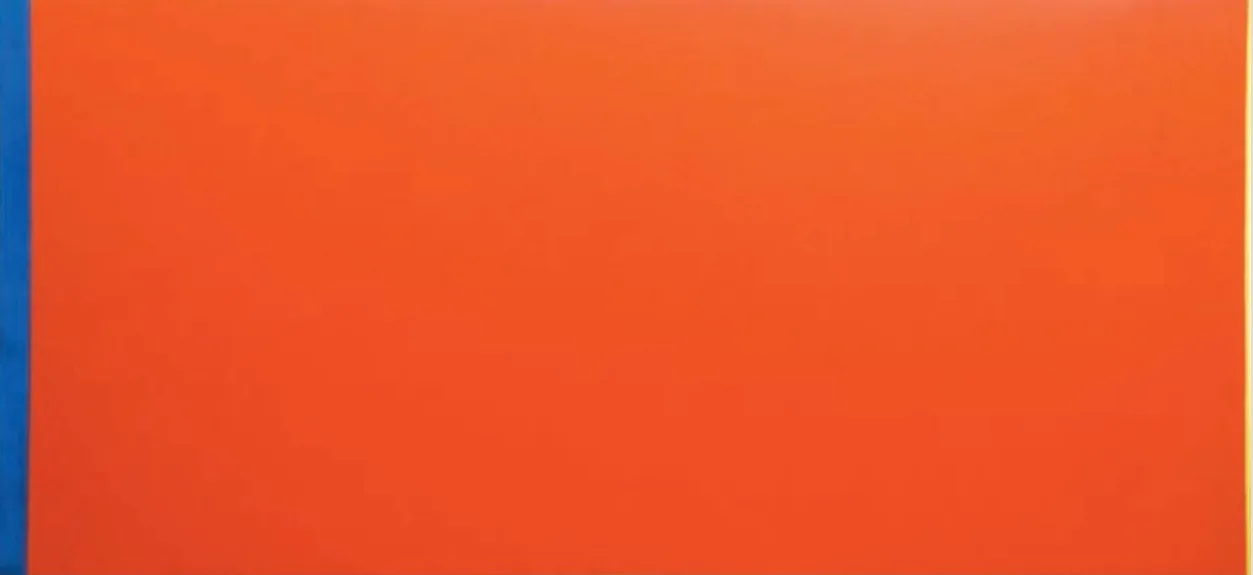
Barnett Newman’s “Who’s Afraid of Red, Yellow and Blue?”
That’s the first one that came to mind just now.
But the artist I’ve loved for a long time is Clyfford Still.
Editor’s Note
Barnett Newman (1905–1970) and Clyfford Still (1904–1980) were leading painters of American Abstract Expressionism after World War II. Both made vast canvases and intense color central to their work.
Newman’s “Who’s Afraid of Red, Yellow and Blue?” in particular spreads the most basic colors, red, yellow and blue, across an enormous surface. He wanted viewers to see and feel the colors in front of them directly, rather than judge them first by the rules or theories of art.
In this interview, Mr. Tillmans, too, said that he does not decide in advance what matters more and what matters less. There is an intriguing kinship between his effort to look afresh at eclipses, gold bars and discarded jeans and Newman’s effort to make people see familiar colors anew.
Given Mr. Tillmans’s long exploration not only of people and objects but also of abstraction and color, it is hardly surprising that these two painters came up at the end of the interview.
The Interviewers
Russell Tovey is a British actor, art collector and curator. He served on the jury for the 2021 Turner Prize.
Robert Diament is a British gallerist and curator who has served as a director of Carl Freedman Gallery and Counter Editions.